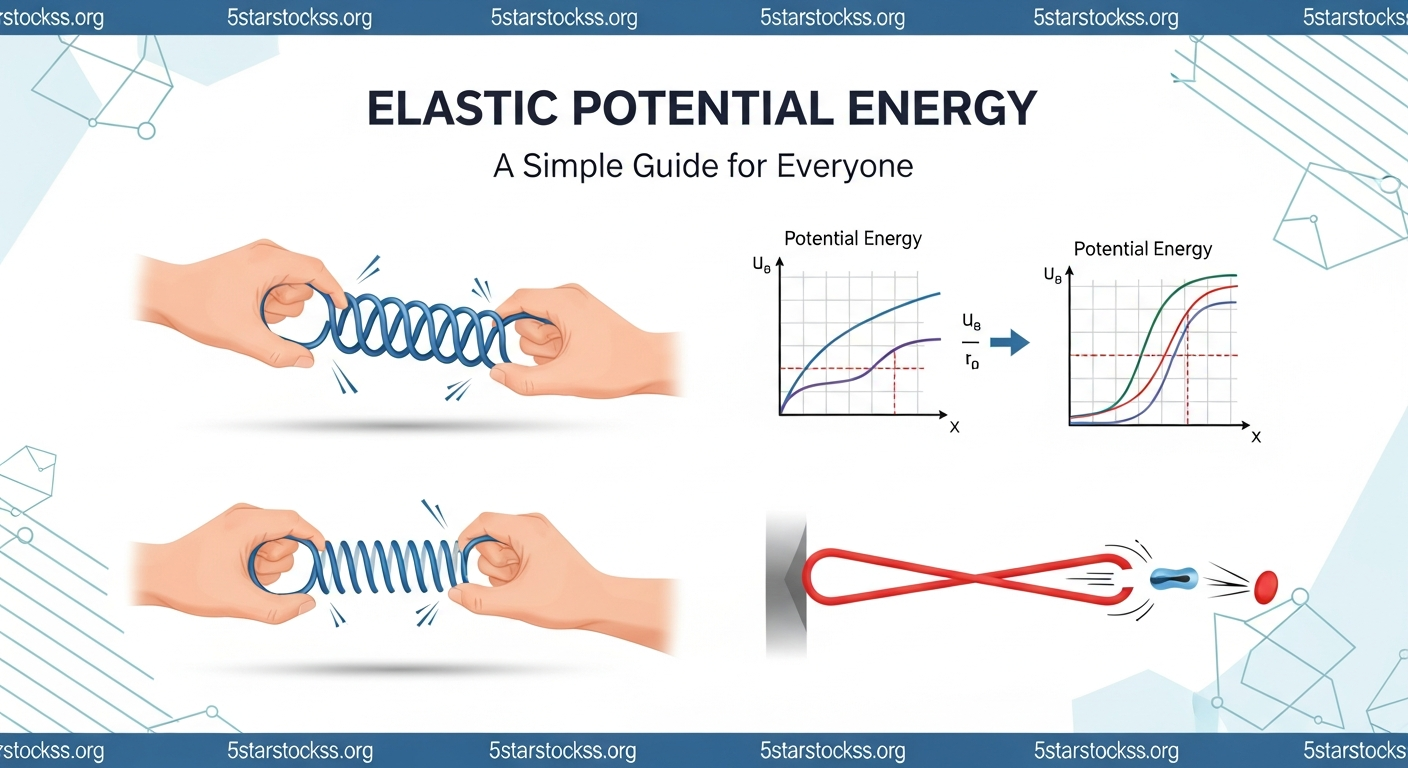
elastic potential energy
elastic potential energyElastic potential energy is the energy stored in an object when it is stretched, compressed, or deformed. This type of energy is everywhere around us, from the rubber bands we use to the springs in toys and even in some sports equipment. When you pull or stretch something elastic, it stores energy inside, and when you let it go, that energy is released. Learning about elastic potential energy helps us understand how many things work in everyday life.
For example, when you pull a rubber band and let it snap back, the band releases its stored energy and moves quickly. This is elastic potential energy in action. It is different from other types of energy because it is only present when something is stretched or compressed, and it disappears when the object returns to its original shape. Scientists use elastic potential energy to explain how objects move and behave, and it is a key part of physics that helps us understand the world. Even small objects like pens with springs or large objects like trampoline springs work because of elastic potential energy. By knowing how this energy works, we can design better tools, toys, and machines that are safer and more fun to use.
What is Elastic Potential Energy and How It Works
Elastic potential energy is stored energy that comes from changing the shape of an object. The more you stretch or compress an object, the more energy it stores. This energy is usually temporary because the object wants to return to its normal shape. Objects like rubber bands, springs, and even some soft metals can store elastic potential energy. Scientists calculate this energy using a simple formula: the energy depends on how much the object is stretched and how stiff it is. A stiffer object needs more force to stretch but can store more energy.
When we release the object, the stored energy turns into motion. For example, if you pull a slingshot, the elastic potential energy in the rubber band becomes kinetic energy, which moves the stone forward. This is why elastic potential energy is very useful. It changes into movement, power, or even sound in some cases. Understanding this energy helps engineers and designers make better machines and tools.
Everyday Examples of Elastic Potential Energy
We can see elastic potential energy everywhere in daily life. Here are some simple examples:
- Rubber bands store energy when stretched and release it quickly when let go.
- Springs in toys, clocks, and pens store energy when pressed or pulled.
- Trampolines use elastic energy in springs to push jumpers up.
- Archery bows store energy in the string when pulled, releasing it to shoot arrows.
- Hair ties and bands store energy when stretched to hold hair in place.
These examples show that elastic potential energy is not just in science labs; it is around us all the time. Even kids playing with toys experience this energy without knowing it.
The Science Behind Elastic Potential Energy
Elastic potential energy happens because of the forces inside materials. When you pull, stretch, or compress an object, tiny forces inside the material resist the change. These forces try to bring the object back to its original shape. The energy stored is a result of these internal forces. This is why elastic materials like rubber, springs, and certain metals can store a lot of energy. Scientists measure how much energy is stored using physics formulas, which involve the material’s stiffness and how far it is stretched or compressed.
Elastic potential energy is also different from other types of energy. Unlike chemical energy in food or fuel, it does not involve breaking or making bonds. Unlike gravitational energy, it does not depend on height. Elastic potential energy is all about shape and force. This makes it very interesting and useful in many fields, from simple toys to advanced engineering.
How Springs and Rubber Bands Store Energy
Springs and rubber bands are common objects that store elastic potential energy. A spring works because it resists stretching or compressing. When you pull a spring, it stores energy, and when released, it returns to its original shape, moving whatever is attached to it. Rubber bands work similarly, but they stretch easily and can store energy quickly. This is why we use rubber bands to launch small objects or hold things together. Both springs and rubber bands are examples of mechanical energy storage.
Elastic Potential Energy in Sports and Fun Activities
Sports and play use elastic potential energy more than we notice. Trampolines, for example, store energy in their springs, giving jumpers height. Archery relies on the energy in a pulled bowstring to send arrows flying. Even footballs and basketballs use elastic energy when they bounce. Athletes sometimes use elastic bands to exercise, storing energy in the bands and releasing it to strengthen muscles. Understanding this energy can also help prevent injuries because it teaches how forces work on the body.
Simple Experiments to See Elastic Potential Energy
You can try small experiments at home to see elastic potential energy in action. Stretch a rubber band between your fingers and let it snap back. Press a small spring in a toy and watch it move when released. Pull a balloon or a piece of elastic tape and notice how it returns to its shape. Even dropping a small bouncy ball shows energy being stored and released. These experiments make learning about elastic potential energy fun and easy. Kids and beginners can see science working in everyday life.
Differences Between Elastic Potential Energy and Other Types of Energy
Elastic potential energy is not the same as other energies. Unlike kinetic energy, which is the energy of motion, elastic potential energy is stored energy waiting to move. Unlike thermal energy, it does not come from heat. Unlike chemical energy, it does not come from chemical reactions. Elastic potential energy is all about the shape and the force applied. When the shape changes, energy is stored; when it returns, energy is released. This makes it simple to understand but powerful in use.
How Elastic Potential Energy Makes Machines Work Better
Many machines use elastic potential energy to work efficiently. Clocks with springs, toys, and some engines store energy in elastic parts to operate smoothly. Even simple devices like staplers use this energy when pressing and releasing. Engineers design machines with springs and elastic materials to save energy and make movement easier. By storing energy temporarily and releasing it at the right time, machines can do more work with less effort.
Fun Facts About Elastic Potential Energy for Kids
Elastic potential energy is not only scientific; it can also be fun to learn. Did you know that a slingshot stores energy just like a bow in archery? A trampoline’s jump is powered by energy stored in springs. Some animals even use elastic energy naturally, like frogs jumping using tendons in their legs. Learning these facts helps kids see science in real life and understand how energy works around them.
Tips to Use Elastic Potential Energy Safely in Daily Life
Even though elastic potential energy is fun and useful, it must be used carefully. Rubber bands can snap and hurt fingers. Springs in toys can pinch skin if not handled properly. Always follow instructions and wear safety gear when playing with objects that store energy. Using this energy wisely ensures that everyone can enjoy it safely.
Conclusion
Elastic potential energy is an amazing and simple type of energy that is everywhere in our daily lives. It is stored when objects are stretched or compressed and released when they return to their normal shape. From toys and sports to machines and simple tools, elastic potential energy makes life easier and more fun. Understanding this energy helps us design safer toys, better machines, and learn more about how the world works. By seeing how energy is stored and released, we can make learning science exciting and practical for everyone.
FAQs
What is elastic potential energy?
Elastic potential energy is energy stored in objects when they are stretched, compressed, or deformed. It is released when the object returns to its original shape.
Where do we see elastic potential energy in real life?
We see it in rubber bands, springs, trampolines, bows in archery, pens with springs, and even in some sports equipment like footballs and basketballs.
How is elastic potential energy different from kinetic energy?
Elastic potential energy is stored energy waiting to move, while kinetic energy is the energy of movement.
About the Author